Les Rencontres Sénégalaises de Théâtre-Forum
INTRODUCTON ET PRÉSENTATION GÉNÉRALE
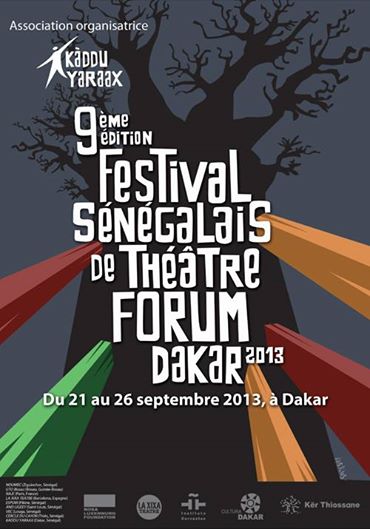
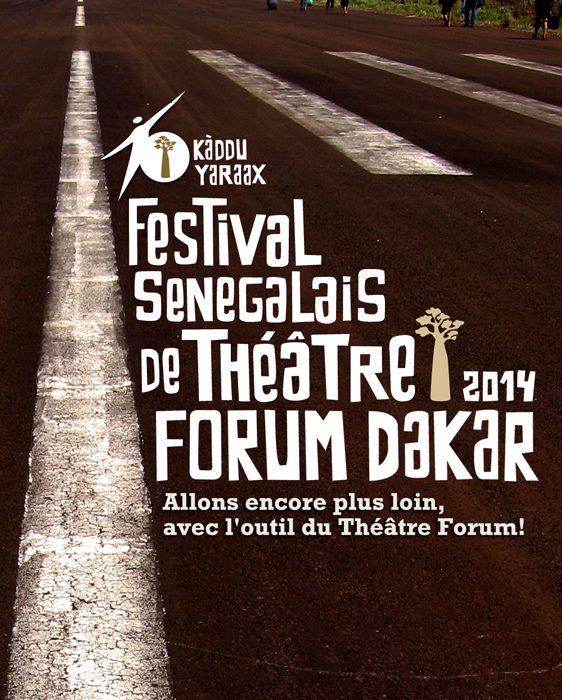
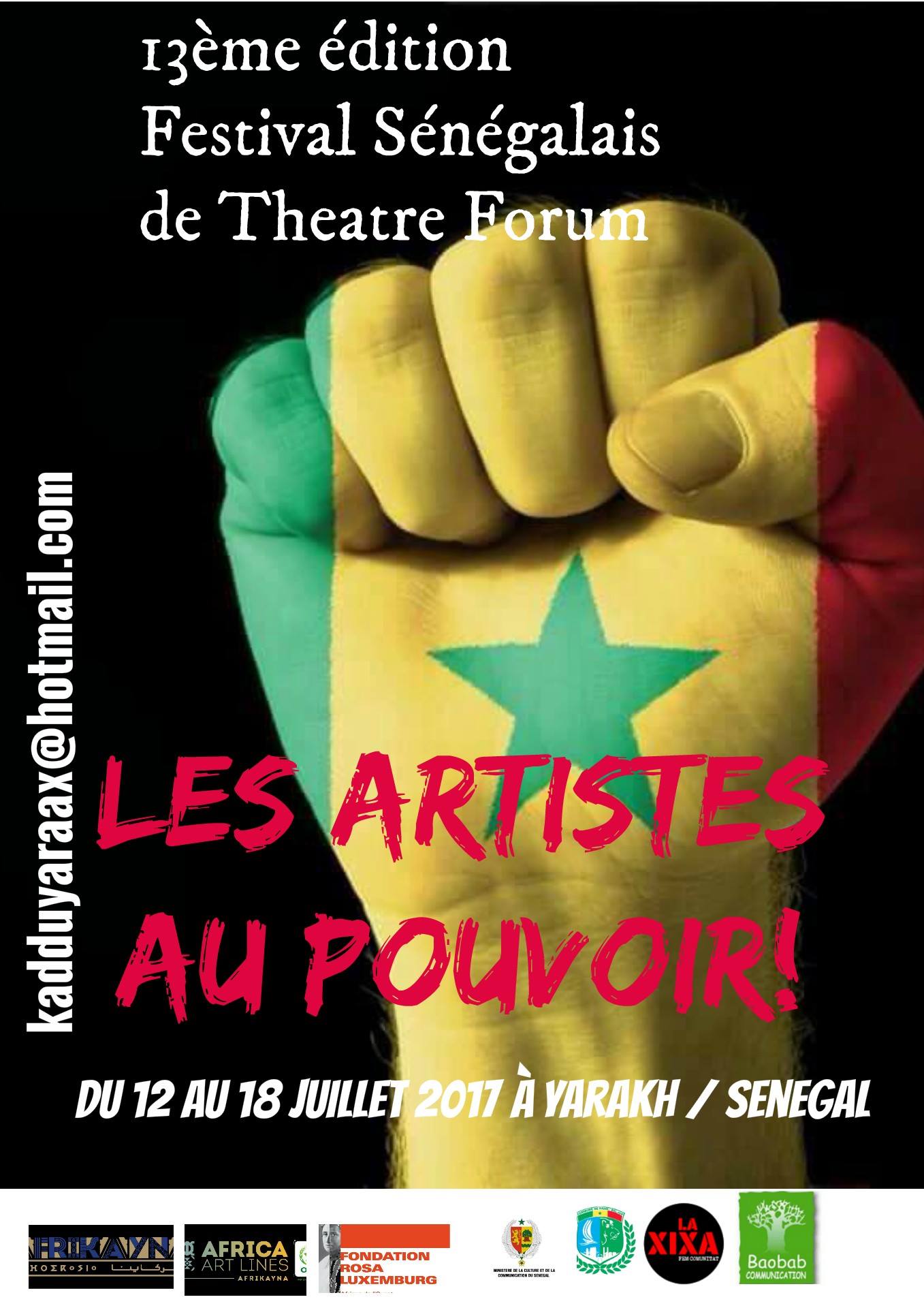
La 20ᵉ édition du Festival Sénégalais de Théâtre-Forum, organisée par Kàddu Yaraax, célèbre vingt ans de festival et plus de trente ans d’engagement en faveur du Théâtre de l’Opprimé. Elle renforce le rôle du Sénégal comme référence régionale du théâtre social, en offrant aux artistes africains un espace accessible de formation, d’échanges et de création, au service du dialogue et de la transformation sociale.
Dans toute l’Afrique de l’Ouest, des dizaines de troupes théâtrales et d’organisations communautaires appliquent le Théâtre-Forum sur le terrain. Cependant, l’absence de filières académiques dédiées au théâtre d’intervention sociale contraint souvent ces praticiens à l’auto-formation.
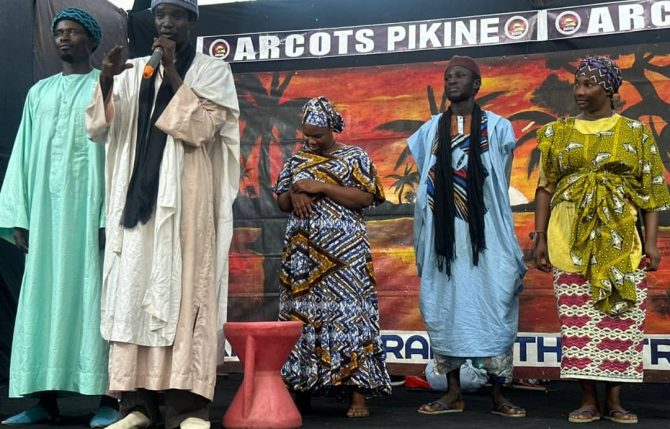
Exigence De Formation
Et De Reconnaissance
CONTEXTE ET
JUSTIFICATION
DU FESTIVAL
Lorem ipsum dolor sit amet, consectetur adipiscing elit. Ut elit tellus, luctus nec ullamcorper mattis, pulvinar dapibus leo.
réponse à un besoin fondamental :
Renforcement de capacités
Perfectionner le jeu d’acteur, la dramaturgie du forum, la technique du Joker (animateur) et l’élaboration de textes ancrés dans la réalité locale.
Reconnaissance professionnelle
Défendre le statut du comédien engagé et valoriser les formations pratiques dispensées au sein des troupes locales aux côtés des parcours universitaires classiques.
Réseautage et rupture de l’isolement
Permettre aux compagnies régionales (Ziguinchor, Kaolack, Kaffrine, Podor, Sébikotane…) et internationales (Gambie, Guinée-Bissau, Republique de Guinée, Mauritanie, RD Congo, Cameroun, USA, Belgique, Brésil, Suisse, France, Espagne…) de croiser leurs pratiques.
Souveraineté culturelle et ancrage populaire
En réunissant à Dakar des troupes internationales et africaines, le festival incarne un modèle de coopération Sud-Sud. Le jeu dans les langues nationales (wolof, pulaar, sérère, diola, mandingue…) garantit un accès direct aux populations et réaffirme le rôle central des savoirs populaires.
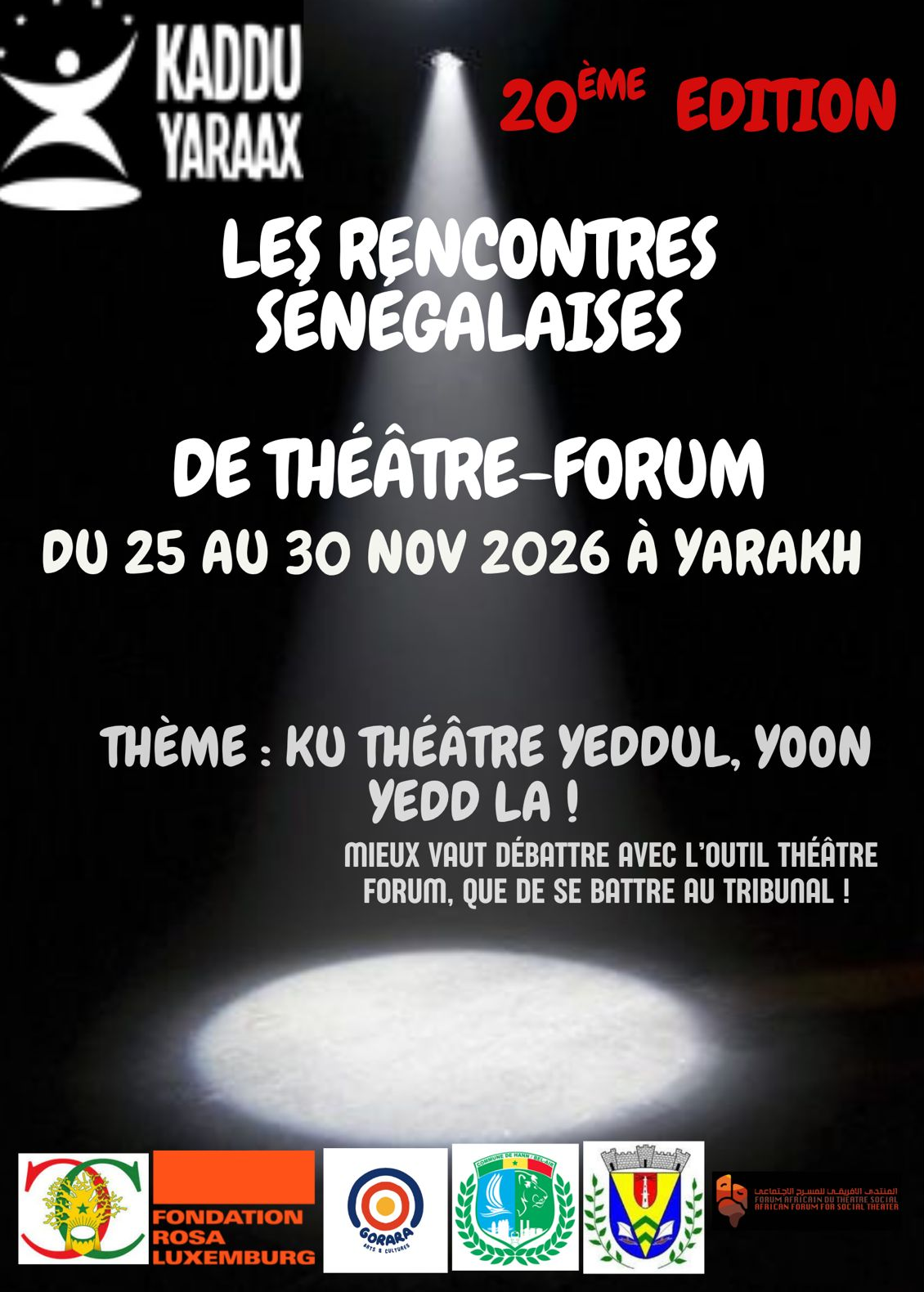
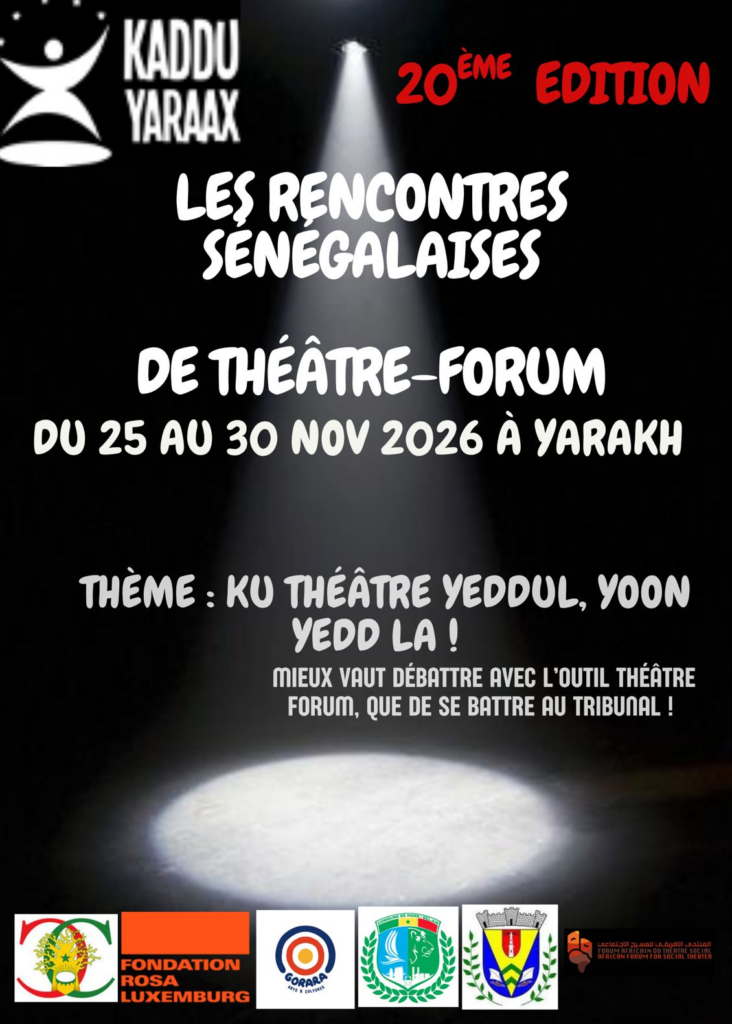
Du 25 au 30 Novembre 2026
20ème édition
RENCONTRES Sénégalaises
de Théâtre-forum
Ku théâtre YEDDUL, YOON YEDD LA
(Mieux vaut débattre avec l'outil théâtre forum, que de se battre au tribunal)
Le fonctionnement de
la scène participative
LE THÉÂTRE-FORUM : MÉTHODOLOGIE ET ANCRAGE CULTUREL
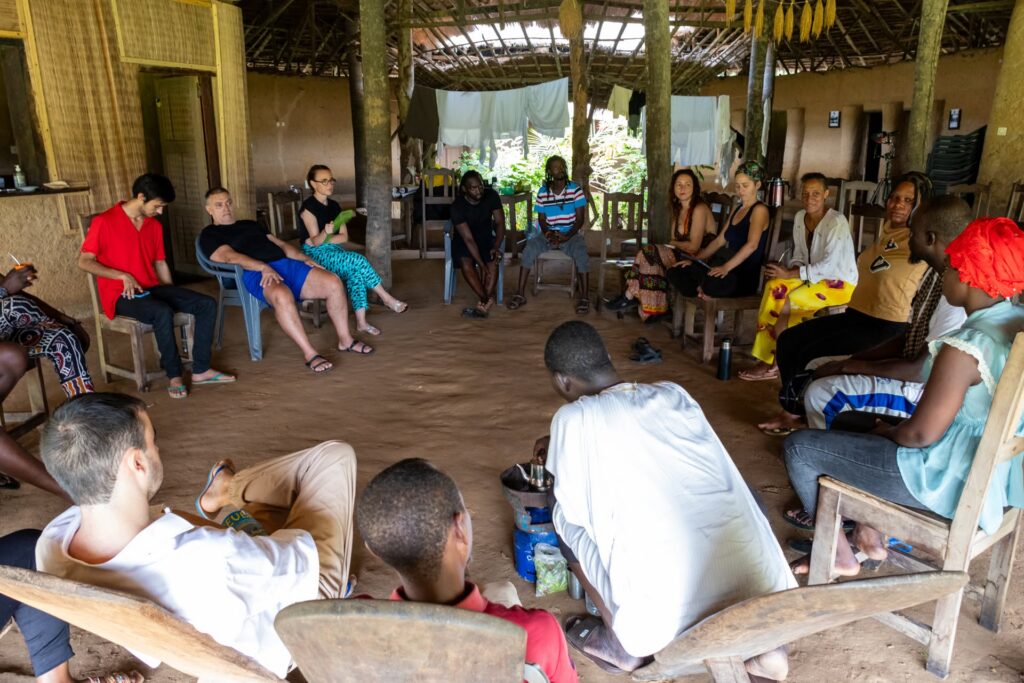
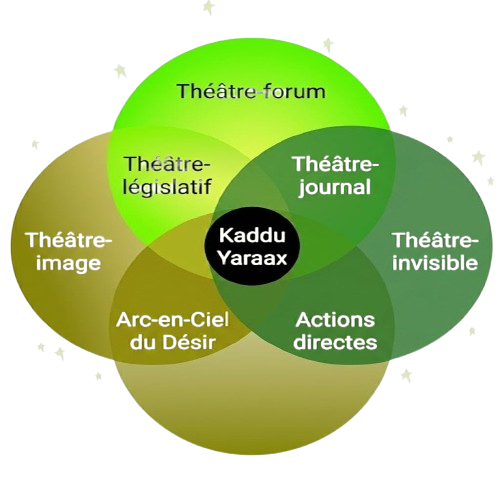
Issu du Théâtre de l’Opprimé fondé par Augusto Boal, le Théâtre-Forum remplace le spectateur passif par le « spect-acteur »
01
- La scène d'oppression
Les comédiens jouent une fiction courte exposant un problème social non résolu qui débouche sur une impasse.
02
- Le Forum
- Le Joker (médiateur/animateur) interrompt le jeu et invite le public à monter sur scène pour remplacer le protagoniste opprimé et tester des alternatives concrètes.
03
- L'expérimentation collective
Les comédiens improvisent en réponse aux propositions du public, permettant d’évaluer la viabilité des solutions dans un cadre sécurisé et bienveillant.
L'importance du Joker
Intermediaire entre Comediens et population
In Senegal, Theatre-Forum naturally connects with the "arbre à palabre" (discussion tree) and traditional conflict resolution mechanisms. The Joker acts like a community facilitator, ensuring a democratic dialogue where the voices of young people, women, and elders have equal value.
Details of the main areas of activity
PROGRAMME AND ACTIVITIES | 20th edition
For this 20th edition, the programme is structured around 30 to 35 activities spread over six days of immersion in the Yarakh district and in various cultural spaces in Dakar.
Forum Theatre and Street Theatre Performances
- The performances are presented outside of institutional venues, as close as possible to the people: Themes performed: Migration, gender-based violence, local governance, community hygiene, and environmental protection. Interactivity: Each session is followed by a 45 to 60-minute citizen forum led by an experienced Joker.
Technical capacity-building workshops
- Dramaturgy and impasse writing: How to construct a realistic scenario without falling into moralising or giving moral lessons.
Ateliers du Joker
- Joker facilitation technique: Managing speaking time, stimulating citizen debate, welcoming stage replacements, and maintaining benevolent neutrality. Creation in national languages: Work on orality, proverbs, and the adaptation of universal texts into Wolof.
Forum Theatre and Street Theatre Performances
- The performances will be as close as possible to the people: Themes performed: Migration, gender-based violence, local governance, community hygiene, and environmental protection. Interactivity: Each session is followed by a 45 to 60-minute citizen forum led by an experienced Joker.
Technical capacity-building workshops
- Dramaturgy and impasse writing: How to construct a realistic scenario without falling into moralising or giving moral lessons. Joker facilitation technique: Managing speaking time, stimulating citizen debate, welcoming stage replacements, and maintaining benevolent neutrality. Creation in national languages: Work on orality, proverbs, and the adaptation of universal texts into Wolof.
Discussions and debates, and conferences
- Spaces for prospective reflection bringing together artists, academics, art critics (hosting international figures in theatre criticism), and development actors: Status of the engaged artist: Debate on professional recognition for social intervention theatre. AI and disinformation: How theatre-forum can counter information manipulation in rural and urban areas.
Critères de Sélection
SELECTION OF COMPANIES AND RECOMMENDATIONS
For this 20th edition, the programme is structured around 30 to 35 activities spread over six days of immersion in the Yarakh district and in various cultural spaces in Dakar.
- Recommandations aux Troupes Participantes
Sobriété et autonomie technique
Favoriser des décors légers, mobiles et symboliques, adaptés à l’espace public (rues, places, cours)..
Format des Pièces
Théâtre forum, (Théâtre de l’opprimé), suivi de 45 à 60 minutes de forum interactif.
Langues
Utilisation privilégiée des langues locales du public cible.
- Critères de Sélection
Pratique de Terrain
Maîtrise éprouvée de la technique du Théâtre Forum (présence d’une vraie situation d’oppression et ouverture effective du forum).
Ancrage Communautaire
Compagnies et individuels travaillant régulièrement sur le terrain auprès des populations vulnérables.
Pertinance Thématique
Propositions abordant des questions d’actualité économique, sociale ou environnementale.
Prise en charge des festivaliers
LOGISTICS AND SOLIDARITY HOSTING IN YARAKH
The organisation is based on a model of solidarity homestays in the Yarakh Tefess neighbourhood:
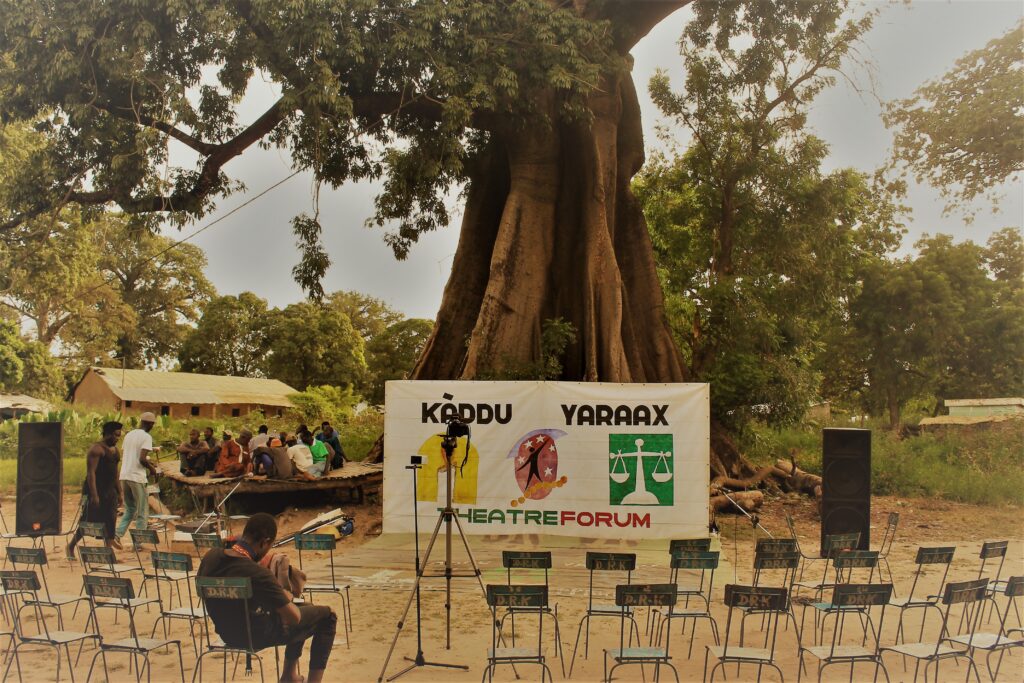
Organisation Logistique
LOGISTIQUE
- Intercultural Immersion: Actors and regional/international guests are hosted by families in the neighbourhood, creating lasting human connections and strengthening community cohesion.
- Local Catering: Meals prepared from local produce by women's associations in the neighbourhood are provided.
- Mobility: Shuttles organised between accommodation sites, workshop venues (Blaise Senghor Cultural Centre, schools) and street stages.
Partenaires
PARTNERS AND NETWORKS
The festival relies on a dynamic of multi-stakeholder partnerships
- Institutional & Local: Ministry of Youth, Sports and Culture of Senegal, Municipality of Hann Bel-Air, City of Dakar.
- Cultural & Educational: Blaise Senghor Cultural Centre, Kër Thiossane, Hann Social and Cultural Centre, Bara Gaye School.
- Organisations & Networks: Rosa Luxemburg Foundation, ANCS (National Alliance against AIDS), Alliance of Initiatives for Peace and Stability in West Africa, Senegalese Theatre-Forum Federation.
- International Partner Troupes: Collaborations with organisations from Africa, Europe and South America (e.g. La Xixa Teatre, GORARA from Casablanca, RAPAGADA from Drôme, GTO from Bissau, Quase-Cine from Brazil…